
Brief Information
Botlikh is spoken in three villages in the Botlikh district of Dagestan: Botlikh (Buikhe), Miarso (Kilu), and Ashino (Pashinu), and in the migrant village of Chontaul, Kizilir district. There are two other farms that are now abandoned: Ankho (in the Botlikh district) and Batlakhatli (in the Tsumada district).
According to the 2010 census, there are 3,508 ethnic Botlikh people. This number may be greatly underestimated, as many Botlikh (like many other Ando-Tsezic peoples) do not consider themselves a separate people but identify as Avars. The situation is complicated by the fact that Botlikh is a district center and a multinational village: apart from Botlikh, it is home to Avars and representatives of other Andic peoples, who also identify as Avars. Authors of grammatical sketches and dictionaries estimate the Botlikh population at approximately 3,000–8,000. These sources do not distinguish Botlikh as an ethnic group from speakers of the Botlikh language. In the 2010 census, only 206 respondents reported speaking Botlikh, but in reality there are far more.
Botlikh is mainly represented by the Botlikh dialect, spoken in the village of Botlikh. The dialect spoken in Miarso village differs from the Botlikh one in some phonological, lexical, and morphosyntactic characteristics, but the difference is small, and the dialects are fully intelligible. The dialect spoken in the village of Ashino has not been studied yet, but according to speakers of Botlikh, it slightly differs from the Botlikh and Miarsi dialects.
Botlikhs call their language “буйхалъи мицIцIи” (“the language of Botlikh”), or “буйхадалъи мицIцIи” (“the language of Botlikhis”). Both people and language derive their names from the name of the main village - Botlikh. For instance: “Болъихъ - балъхъал” (Avar), “Булъиха - булъихади” (Godoberinskis), “булъидира-в” (Andi).
The Botlikh people are engaged in horticulture (cultivating apricots, apples, peaches, and other fruits), farming, and beekeeping, with cattle breeding practiced to a lesser extent. From the mid-19th century, Botlikh has been a major trading center in western Dagestan.
The Botlikhs are Sunni Muslims.
Genetic relationship
Botlikh belongs to the Andic group of the Nakh-Dagestanian language family. This language has two dialects: Botlikh and Miarsi.

Botlikh dialect proper
the Botlikh village of Botlikhsky district (Dagestan, Russia)
the Ashino village of Botlikhsky district (Dagestan, Russia)
Miarso dialect
the Miarso village of Botlikhsky district (Dagestan, Russia)
Dialects and their distribution
Language contacts and multilingualism
Botlikhs speak Avar and Russian fluently.
Language functioning
- Legal status
- Writing system
- Language standardization
- Domains of language usage
The Botlikh language has no official status.
The Botlikh language has no written form. Historically, the language of literacy has been Avar. When necessary, Botlikh speakers use the Avar alphabet (based on the Cyrillic script) to write in their native language. However, this alphabet does not provide separate graphemes for the lateral affricate [ƛ] or for nasalised vowels. In Russian scholarly publications (including dictionaries), authors use an extended Avar script—in which the lateral affricate is denoted, for example, by the digraph lI—but this convention is not widely known among native speakers.
The Botlikh language has no literary norm, and speakers of different dialects communicate with each other using their own respective dialects.
Family / everyday communication
Family / everyday communication
Botlikh is used in everyday life and for communication among residents of the villages of Botlikh, Miarso, and Ashino.
Education
Education
Botlikh is not taught as a school subject; education is conducted in Russian. During classes dedicated to their mother tongue, Botlikh children study Avar instead. In kindergartens located in the village of Botlikh, children are addressed in Russian, since not all children in the village are Botlikh. Botlikh is not used in the writing of teaching and educational literature.
Mass media
Mass media
There is no press in Botlikh. Russian is used in this domain.
Culture
Culture
There is a private museum dedicated to Abuali Aliyev in the village of Botlikh.
Science
Science
Scientific works are not published in Botlikh. There is some material about the language in English, Russian, and Georgian.
Folklore
Folklore
H. G. Azayev in his Dissertation (1975) published two fairy tales and a list of proverbs in Botlikh. Various texts were also published in grammar written by T.E. Gudava (1962).
Literature
Literature
There is no literary work produced in Botlikh.
Religion
Religion
Some rituals and chants are performed in Botlikh, however Arabic and Avar are used more generally.
Legislation
Legislation
No official documents are published or printed in Botlikh. Instead, Russian is used.
Administrative activities
Administrative activities
Botlikh does not serve as the language of office work and business correspondence. However, it is used orally in rural administrations.
Legal proceedings
Legal proceedings
The language of legal proceedings in the Republic of Dagestan is Russian.
Industry
Industry
There is no industrial production in the region of Botlikhs.
Agriculture
Agriculture
Botlikh is used in oral communication.
Trade and service
Trade and service
In addition to Avar and Russian, Botlikh is used in trade and service.
Transport
Transport
In rural transport, passengers and drivers communicate in Avar and Botlikh.
Internet
Internet
There are no official websites in Botlikh. Groups on social networks are in Russian, but users' comments include Botlikh. Botlikhs communicate in their mother tongue with each other. For example, on WhatsApp.
Dynamics of language usage
Botlikh is actively used in communication among the Botlikh people. Avar remains relevant as a second language because there are many Avars in Botlikh, but it is gradually being supplanted by Russian, a language of interethnic communication with a wider reach. Members of the younger generation speak Avar less fluently than their elders, yet they have been fluent in Russian since birth. Botlikh is still being passed down to children, and Botlikh children speak it to one another, although some families are switching to Russian.
The movement in support of the native language among the Botlikh people is limited, but there is no large-scale shift to Russian. Speakers generally use their language for everyday communication. Notably, Botlikh dictionaries were initiated primarily by speakers of Botlikh themselves. In 2020, a dictation in the Botlikh language was held for the first time.
According to the censuses of 1886, 1895, and 1926, about 1,000 people lived in Botlikh (mostly Botlikh, who were counted as Avars only from the 1930s onward). By 2010, that number had increased tenfold, although it should be stressed that approximately half of the population of Botlikh was made up of other peoples. The population of Miarso in 1886, 1895, and 1926 was nearly 300; in 2010, it numbered 1,714. It can be assumed that the Botlikh population in both villages increased by a factor of 4–5 over the course of 100 years.
Graphical representation of the linguistic situation (based on population census data)
Language structure
Phonetics
Botlikh has 10 vowels sounds and 42 consonants.
Phonetics
Botlikh has 10 vowels and 42 consonants.
Vocalism. The vowels are a, e, i, o, u, along with the nasalized ã, ẽ, ĩ, õ, ũ. Long vowels sometimes occur as variants of short ones under stress.
Consonantism. The language contains guttural, uvular, lateral, pharyngeal, and laryngeal consonants. Labialized consonants appear when i–a is interchanged after a consonant. Consonants are contrasted by voicing (voiceless vs. voiced), by abruptness/non-abruptness, and by intensity.
Consonants occur in the following series: b – p, d – t – t', g – k – kː – k' – k'ː. Some affricates are contrasted in abruptness and intensity: c – c', cː – c'ː, č – č', čː – č'ː. Lateral and uvular affricates have only opposable abruptness: ƛ – ƛ', q – q', but they are realized intensively. The voiced postalveolar affricate ǯ occurs only in borrowed words, in free variation with the spirant ž.
The pharyngeal consonants ħ and ʕ also occur most frequently in borrowings. Among fricatives, the opposition in voicing is found in postalveolar (ž – š), uvular (ʁ – χ), and laryngeal (ʔ – h) consonants. The others form an opposition in intensity: s – sː, š – šː, ɬ – ɬː, χ – χː. The following sonorant consonants are available: w, m, n, r, l, j.
The syllable structure is CV or CVC. The most common word structures are CVCVC, CVCCV, and CVCVCV.
Prosody. Stress in Botlikh is dynamic and forms minimal pairs, for example: mas-á 'tell' and más-a 'told'.
Morphology
Botlikh is an agglutinative language, although some elements of inflection are present in both nominal and verbal morphology.
Morphology
The following parts of speech are distinguished in Botlikh: nouns, adjectives, numerals, pronouns, verbs, adverbs, postpositions, particles, and interjections.
The grammatical categories of nouns are class (gender), animacy, number, and case. Like other languages of the Nakh-Dagestani family, Botlikh has a rich system of spatial cases. Verbs are divided into transitive, intransitive, and labile. The main grammatical categories of the verb are tense and mood (the mood category merges with the tense category). Evidentiality appears as an additional meaning of some tenses.
Among the most common means of word formation (both nominal and verbal) are suffixation, compounding, and reduplication.
Syntax
The basic word order in Botlikh is SOV, but word order is generally not strict, and other variants are also possible. Within a noun phrase, dependents are placed to the left of the head.
Syntax
The basic word order in Botlikh is SOV, but word order is generally not strict, and other variants are also possible. In a noun phrase, dependents are placed to the left of the head. Compound sentences are formed using non-finite forms (participles, converbs, infinitives, and masdars). Subordinate clauses usually precede the main verb.
Vocabulary
Most borrowings in Botlikh are from Arabic and Russian.
Vocabulary
Most borrowings into Botlikh are from Arabic and Russian. Vocabulary related to religion, as well as to law, ethics, and other areas of knowledge, are borrowed from Arabic. Russian borrowings mainly represent the names of technological innovations of the 20th–21st centuries, along with terminology from Soviet everyday life and government. Avar borrowings are also numerous. There are also Turkic and Persian words, which in all probability were borrowed through Avar.
Исследование языка
Botlikh was first mentioned in 1895 in a work by the German officer and ethnographer R. von Erkert. The renowned Caucasian scholar A. M. Dirr published a brief description of the language in 1909, alongside descriptions of other Andian languages. To this day, T. E. Gudava's grammar of Botlikh, written in Georgian, remains the only complete grammar of Botlikh. Since then, two dissertations devoted to vocabulary and two dictionaries have been published, but questions of phonetics, grammar, and syntax remain rather poorly studied. Currently, C. Naccarato and S. Ferjes (National Research University Higher School of Economics, Moscow) are working on the system of agreement in animacy and supervising students' work on Botlikh grammar.
Language experts

Samira Verhees
She studies the Botlikh language, and her work includes a grammatical sketch of Botlikh.

Chiara Naccarato
She studies Botlikh.

Magomed Gadzhievich Abusov
The author of the Botlikh-Russian Dictionary.
Research centres
Linguistic Convergence Laboratory
The work on the Botlikh language.
Core references
Grammatical Descriptions
H.G. Azayev, Botlikhskiy Yazyk // Yazyki Dagestana / Ed. by G.G. Gamzatova. M./Makhachkala: Vostok. 2000. p. 346-359.
M.E. Alekseev, Botlikhskiy Yazyk // Lingvisticheskiy enciklopedicheskiy slovar. Moscow: Soviet Encyclopaedia. 1990. p. 76.
M.E. Alekseev, Botlikhskiy Yazyk // Krasnaya kniga yazykov narodov Rossii: Enciklopedicheskiy slovar-spravochnik. M.: Academia. 1994. p. 20-21.
M.E. Alekseev, Botlikhskiy Yazyk // Yazyki Narodov Rossii. Krasnaya Kniga. Enciklopedicheskiy slovar-spravochnik. M.: Academia. 2002. p. 49-51.
M.E. Alekseev, Botlikhskiy Yazyk // Pismennye yazyki mira. Yazyki Rossiyskoy Federacii. Sociolingvisticheskaya enciklopediya. B. 2. М.: Academia. 2003. p. 89-98.
M. E. Alekseev, Botlikhskiy Yazyk // Yazyk i obshchestvo. Enciklopediya. M.: Azbukovnik. 2016. p. 94-95.
T.E. Gudava, Botlikhskiy Yazyk. Grammaticheskiy analiz, teksty, slovar. Tbilisi: Akademiya nauk gruzinskoi SSR. 1962. [in Georgian, summary in Russian].
T.E. Gudava, Botlikhskiy Yazyk // Yazyki narodov SSSR. Part 4: Iberiysko-kavkazskie yazyki / Ed. by E.A. Bokarev, K. Lomatidze. M.: Nauka. 1967. p. 293-306.
T.E. Gudava, Botlikhskiy Yazyk // Gruzinskaya sovetskaya enciklopediya. P. 2. Atotsoba-Gariga. Tbilisi, 1977. p. 444-445. [in Georgian language].
T.E. Gudava, Botlikhskiy Yazyk // Georgia. Enciklopediya. Т. 1. A - Gildia. Tbilisi, 1997. p. 454. [in Georgian language].
Z. M. Magomedbekova, Botlikhskiy Yazyk // Yazyki mira. Kavkazskie yazyki / Ed. by M. E. Alekseev et al. M.: Academia. p. 1999 (2001). С. 228-236.
T.A. Maisak, Botlikhskiy Yazyk // Bolshaya Rossiyskaya enciklopediya. M.: Bolshaya Rossiyskaya entsiklopediya. 2006. p. 94-95.
P.A. Saidova, Botlikhskiy Yazyk // Yazyki Rossijskoy Federacii i sosednih gosudarstv. Enciklopediya v trekh tomah. Moscow: Nauka. 2001. p. 222-228.
R.S. Khalidova, Lingvisticheskiy portret botlihskogo yazyka // Vestnik Akademii Nauk Chechenskoj Respubliki. 2017. № 34 (1). p. 77-81.
M.E. Alexeyev, Verhee, S. Botlikh // Kavkazskie yazyki. Mezhdunarodniy spravochnik. Part 2 / ed. by Y. Koryakov, T. Maisak. Berlin/New York: Mouton de Gruyter. Fort.
Dictionaries
M. E. Alekseev, H. G. Azayev, Botlihsko-russkiy slovar. M.: Academia. 2019.
P. A. Saidova, M.G. Abusov, Botlihsko-russkiy slovar. Mahachkala: Rossiyskaya Akademiya Nauk, Dagestanskiy Nauchniy Centr Institut Yazyka, Literatury i Iskusstva im. G. Cadasy.2012.
Selected Papers on Grammatical Issues
H.G. Azayev, Obrazovaniye Kompositov v Botlikhskom Yazyke // Sbornik nauchnyh soobshcheniy fakulteta inostrannyh yazykov. Mahachkala,1973. p. 102-120.
H.G. Azayev, Arabskiye Zaimstvovaniya v Slovarnom Zapase Botlikhskogo Yazyka // Sbornik nauchnyh soobshcheniy fakulteta inostrannyh yazykov. Mahachkala, 1973. p. 120-138.
H.G. Azayev, Slovoobrazovaniye i Leksika Botlikhskogo Yazyka. Dissertaciya na soiskaniye uchenoy stepeni kandidata filologicheskih nauk. Mahachkala: Rossiyskaya Akademiya Nauk, Dagestanskiy Filial AN SSSR Institut istorii yazyka i literatury im. G. Cadasy. 1974.
H.G. Azayev, Russkiye Zaimstvovaniya v Botlikhskom Yazyke // Semantika yazykovyh edinic raznyh urovney. Coll. 7. Mahachkala: IPC DGU. 2000. p. 189-194.
A.M. Gasanova, Somatoicheskaya terminologiya Botlikhskogo Yazyka // Problemy otraslevoy leksiki dagestanskih yazykov: Somaticheskie terminy. Mahachkala, 1986. p. 45-48.
A.M. Gasanova, Nazvaniya derev'ev, kustarnikov i trav v botlihskom yazyke // Problemy otraslevoy leksiki dagestanskih yazykov: Nazvaniya derev'ev, trav, kustarnikov. Mahachkala, 1989. p. 158-163.
T.E. Gudava, Osnovnyye morfologicheskiye kategorii botlihskogo yazyka. Tezisy dissertacii na soiskaniye uchyonoy stepeni kandidata filologicheskih nauk. Tbilisi: Publishing house of the Georgian SSR Academy of Sciences. 1948. [in Georgian].
T.E. Gudava, Skloneniye imen sushchestvitel'nyh v botlihskom yazyke // Voprosy izucheniya iberiysko-kavkazskih yazykov. Moscow: Publishing House, USSR Academy of Sciences. 1961. p. 130-146.
Z.M. Mallaeva, M.M. Khaybullaeva, Konverby botlihskogo yazyka, reprezentiruyushchie nefinitnuyu model' taksisa // Sovremennye problemy nauki i obrazovaniya. 2015. № 2. p. 366.
P.A. Saidova, Semanticheskaya harakteristika chastits botlihskogo yazyka // Materialy II Mezhdunarodnogo kongressa kavkazovedov. Tbilisi, 2010. p. 477-478.
J.I. Suleimanova, Nazvaniya zhivotnyh v botlihskom yazyke // Vestnik VEGU. 2013. № 3 (65). p. 195-198.
J.I. Suleimanova, Otraslevaya leksika botlihskogo yazyka. Dissertaciya na soiskaniye uchenoy stepeni kandidata filologicheskih nauk. Makhachkala, 2013.
A.M. Halilbekova, Mikrotoponimiya Botliha // Dagestanskaya onomastika: Materialy i issledovaniya. Part 2. Makhachkala, 1996. p. 34-38.
P.I. Shapieva, Reduplikaciya imen prilagatelnyh v botlihskom yazyke // Aktualnye problemy yazyka i literatury. Sbornik statey prepodavateley i sotrudnikov. Part. 5. Makhachkala, 2000. p. 33-34.
Ethnolinguistics and Ethnology
B.M. Alimova, Magomedov D.M. Botlikhtsy. XIX - the beginning of XX century: Istoriko-etnograficheskoye issledovaniye. Makhachkala, 1993.
B.M. Alimova, Magomedov, D.M. Botlikhtsy // Narody Dagestana / Edited by S.A. Arutyunov, A.I. Osmanov, G.A. Sergeeva. Moscow: Nauka. 2002. p. 180-188.
Resources
Corpora and text collections
There is a publicly available electronic corpus of the Botlikh language.
Corpora and text collections
The corpus contains oral texts in the Botlikh language. The texts were recorded in 2022 in the village of Botlikh, Botlikh District, Republic of Dagestan. The village of Botlikh lies within the area of the Botlikh proper dialect of the Botlikh language, which belongs to the Andian group of the Nakh-Dagestanian language family.
Samyra Verhees, Sara Zadykyan, and Chiara Naccarato participated in the work on the corpus.
Other electronic resources
The website of the Intercontinental Dictionary Series (IDS) project presents a Botlikh wordlist of 1,430 words.
Data for this page kindly provided by
Chiara Naccarato and Samira Verhees
Sources
We relied on the literature listed above, our own 2019 field data, and the following resource:
Atlas of Multilingualism in Daghestan — Census data (https://multidagestan.com/census).
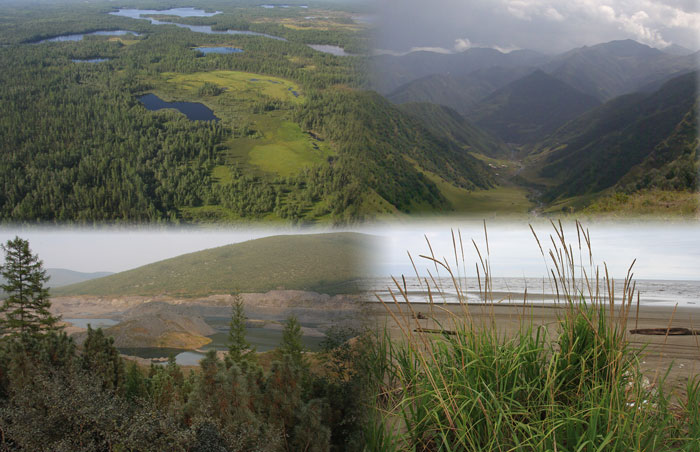
The photos were taken by Chiara Naccarato and Samira Verhees.
Photos


