
Brief Information
The Nogais live in the two republics of the North Caucasus — Dagestan and Karachay-Cherkessia, as well as in Stavropol Krai. Some groups also live in Chechnya and outside Russia in Turkey, Kazakhstan, and Uzbekistan. According to the 2010 census, there were 87,119 speakers of the Nogai language in Russia. The ethnic Nogai population was 90,666.
The self-designation of the people is ногай [nogai], and they call their language ногай тили [nogai tili]. There are three main dialects found in different regions: Karanogay (Dagestan), Ak Nogay (Karachay-Cherkessia), and Proper Nogay (Stavropol Krai). The question of the languages of the Astrakhan Nogais – the Karagash, Alabugat, and Yurt Tatars – remains unresolved: previously they were considered dialects of Nogai, but more recently some researchers classify them as separate languages.
The Nogais’ religion is Sunni Islam. Their traditional occupation was nomadic pastoralism, focusing on small livestock and horses. Currently, sedentary farming is also developed, especially the cultivation of melons and gourds.
Genetic relationship
Nogai belongs to the South Kipchak (Nogai) subgroup of the Kipchak group within the Turkic language family.
Distribution

Currently, the Nogais live mainly in Dagestan, Stavropol Krai, Karachay-Cherkessia, Chechnya, Astrakhan Oblast, and Kalmykia.
In Dagestan, the main areas of Nogai residence are the Nogaysky, Tarumovsky, Kizlyarsky, Babayurtovsky, and Khasavyurtovsky districts. Within the Nogaysky District, they inhabit villages such as Terekli-Mekteb, Kunbatar, Nariman, Ortatyube, Karagas, Karasu, Kumli, Edige, Chervlyonnye Buruny, and Leninaul. The village of Kustek is located in Khasavyurtovsky District. In Kizlyarsky and Babayurtovsky districts, Nogais live alongside Kumyks, and many have switched to the Kumyk language. A number of Nogais also live in the settlement of Sulak (within the city district of Makhachkala).
In Karachay-Cherkessia, Nogais live mainly in the Nogaysky district, in villages including Adil-Khalk, Ikon-Khalk, Erken-Khalk, Erken-Shakhar, and Erken-Yurt.
In Stavropol Krai, Nogais live mainly in the Kochubeyevsky, Neftekumsky, and Stepnovsky districts, as well as in the town of Mineralnye Vody.
In Astrakhan Oblast, there are several distinct Nogai groups: the Yurt, Karagash, Kundrov, and Utar.
The Yurt Nogais live in the villages of Tatarskaya Bashmakovka, Karagali, Yaksatovo, Solyanka, the Moshaik settlement, and the Zatsarevo microdistrict.
The Yedisans live in the villages of Kilinchi, Tri Protoka, and Kulakovka.
The Karagash live in the villages of Seitovka, Aysapay, Kuyanly, Zaykovka, Novorusovka, Yasyn-Sokan, Dzhanay, Maly Aral, and Lapas; in the village of Rastopulovka; and in the settlements of Sennoy, Karaagash, Kiri-Kili, Svobodny, and Yango-Aul, as well as in the Babaevsky microdistrict.
The Kundrov live in the village of Tuluganovka.
The Utar live in the villages of Yango-Asker and Zenzeli, as well as in neighbouring districts of Kalmykia.
There are three main dialects, corresponding to different regions: Karanogay (Dagestan), Ak Nogay (Karachay-Cherkessia), and Proper Nogay (Stavropol Krai). The linguistic status of the varieties spoken by the Astrakhan Nogais—the Karagash, Alabugat, and Yurt groups—remains unresolved. While traditionally classified as dialects of Nogai, some contemporary researchers argue for their classification as separate languages.
Dialects and their distribution
Language contacts and multilingualism
In Dagestan, Nogais live in close proximity to Kumyks. Knowledge of Kumyk is widespread, and in Babayurtovsky District, many Nogais have switched to Kumyk. In Karachay-Cherkessia, the main contacts of the Nogais are with Karachays, and some Nogais also speak Kabardian-Cherkes, Karachay-Balkar, and Abaza. Some Nogais from or born in Chechnya speak Chechen. Historically, there were extensive contacts with the Kalmyks, often involving conflict.
Language functioning
- Legal status
- Writing system
- Language standardization
- Domains of language usage
Nogai is recognized as an official language in the republics of Dagestan and Karachay-Cherkessia.
Historically, the Nogai language used several scripts. Until 1928, it was written in the Arabic script. Subsequently, a Latin-based alphabet was adopted until 1938, when it was replaced by the Cyrillic script. The modern Nogai Cyrillic alphabet was formally approved in 1950.
Standard Nogai is based primarily on the Karanogai dialect, with some elements incorporated from the Proper Nogay dialect.
Family / everyday communication
Family / everyday communication
Nogai is the main language of family and everyday communication within Nogai communities.
Education
Education
Language of Instruction
Nogai is widely used as a language of instruction in the republics of Dagestan and Karachay-Cherkessia, as well as in the Chechen Republic, specifically in three villages. In Stavropol Krai and Astrakhan Oblast, Nogai is taught only in extracurricular or elective courses.
In preschools, Nogai is actively used as children learn Russian to prepare for primary school. Up to half of preschool classes can be conducted in Nogai, and cultural events, such as holidays, often feature children performing poems and songs in the language.
Subject of Study
In Dagestan and Karachay-Cherkessia, Nogai is a compulsory subject from primary school through grade 11 (secondary education). In the Chechen Republic, Nogai is taught as a subject in three schools. It is also studied in several higher education institutions that train Nogai language teachers, namely the Karachay-Cherkess State University (KChGU) and the Dagestan State Pedagogical University (DGPU).
Textbooks & Manuals
Currently, only textbooks for the subjects "Native Language" and "Native Literature" are published in Nogai; all other textbooks are in Russian.
Extracurricular Activities
In some villages in Stavropol Krai and Astrakhan Oblast, there are Nogai language clubs.
Mass media
Mass media
In Dagestan and Karachay-Cherkessia, there are TV and radio programs broadcast in Nogai. In Dagestan, the newspaper "Шоьл тавысы" (Voice of the Steppe) and the children's magazine "Лашын" (Young Falcon) are published. In Karachay-Cherkessia, the newspaper "Ногай давысы" (Voice of the Nogais) and the children's magazine "Маьматекей" (Dandelion) are published.
Culture
Culture
Traditional Culture
Traditional Nogai songs are performed at weddings and other celebrations.
Amateur Performance
There are amateur groups that perform songs in Nogai. The composer, poet, and performer Alibiy Romanov, who performs both medieval and modern Nogai songs, is recognized as the "Akyn (bard) of the Nogai people."
Variety Show
Nogai variety shows are relatively common.
Theatre
The Nogai Drama Theater in the village of Terekli-Mekteb (Nogaysky District, Dagestan) and the Nogai Drama Theater in the village of Erken-Khalk (Karachay-Cherkessia) stage performances, primarily in the Kumyk language.
Cinema
Nogai is not used in cinema.
Animation
Popular Soviet animated films have been translated into Nogai.
Museums
In museums in Dagestan and Karachay-Cherkessia, exhibit descriptions and explanatory texts are provided only in Russian. Nogai is not used for this purpose.
Audio and Video Production
A significant amount of audio and video content is produced in Nogai, including discs by popular pop and amateur groups, as well as videos on YouTube.
Science
Science
There are a number of linguistic descriptions of the Nogai language published in Nogai itself, for example, Ногай тилинъ синтаксиси ("Nogai Syntax").
Folklore
Folklore
There is a rich oral folklore in Nogai, which has been recorded in numerous collections. The most famous genre is the Nogai heroic epic, represented by works such as "Эдиге", "Мамай", "Карасай эм Казый", "Муьсевке баьтир", and "Шора баьтир".
Literature
Literature
Nogai fiction began to develop in the first decades of the 20th century. Contemporary fiction is represented by the works of writers such as Z. Kaibaliyev, B. Abdullin, M. Kurmanaliyev, K. Orazbayev, G. Adzhigeldiyev, B. Adzhigeldiyev, K. Temirbulatova, S. Kapayev, F. Abdulzhalilov, and others.
Religion
Religion
Nogai is widely used in the Islamic religious domain, particularly in rituals such as lamentations, wedding ceremonies, and funeral rites. Some journalism and TV programs in Nogai address Islamic topics. Most Islamic literature in Nogai has been published since the early 1990s. There exist translations of parts of the Quran into Nogai, as well as a complete translation of the Bible.
Legislation
Legislation
Nogai is not used as a primary language of legislation. However, some official documents, such as the Constitution of the Republic of Dagestan, are also published in Nogai.
Administrative activities
Administrative activities
Nogai is rarely used in the executive bodies and governments of the Republics of Dagestan and Karachay-Cherkessia. However, at the local level in areas of compact Nogai residence, it is used orally. In some cases, the minutes of meetings and resolutions of local government bodies are also recorded in Nogai.
Nogai is not used in the linguistic landscape (e.g., public signage). Placards indicating localities, for example, contain inscriptions only in Russian.
Legal proceedings
Legal proceedings
Nogai is not used in legal proceedings, except when interpretation from Nogai into Russian is required for monolingual participants. Russian is the language of this domain.
Industry
Industry
Nogai is not used in industry; Russian is used exclusively.
Agriculture
Agriculture
Nogai is widely used in agriculture.
Trade and service
Trade and service
In rural areas, Nogai is used in shops. In cities, Russian is used in trade and services.
Transport
Transport
Nogai is not used in transport; Russian is used in this domain.
Internet
Internet
Nogai is increasingly used on the Internet.
Dynamics of language usage
In the Nogaysky districts of Dagestan and Karachay-Cherkessia, the Nogai language is spoken across all age groups. While some elderly individuals are monolingual in Nogai, there are simultaneous processes of gradual language loss among the younger generation. Overall, attitudes toward the native language are positive, though organized language activism remains limited.
Language structure
Vocabulary
Nogai has a large layer of Arabic, Persian and Russian vocabulary.
Vocabulary
Nogai has a large layer of Arabic, Persian and Russian vocabulary. There are some borrowings from Mongolian, neighbouring Turkic and other languages of the Caucasus (Avar, Kabardino-Cherkes)
Language experts
Maria Amerbievna Bulgarova
(Cherkessk, Karachay-Cherkess Institute for Humanitarian Studies)Author of works in the field of Nogai onomastics.
Mesku Idrisovna Kidirniyazova
(Makhachkala, Dagestan State University)Author of works in the field of Nogai vocabulary.
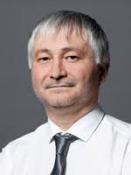
Ahmet Aminovich Yarlykapov
(Moscow, Moscow State Institute of International Relations)Author of works in the field of history and ethnography of the Nogai people, as well as a number of works on the Nogai language.
Core references
Grammatical Descriptions
Baskakov N.A. Nogaĭskiĭ âzyk i ego dialekty: Grammatika, teksty i slovar' [The Nogai language and its dialects: grammar, texts, and dictionary] / Ed.-in-chief prof. N.K. Dmitriev. Moscow; Leningrad: AN SSSR publishing, 1940.
Kalmykova S.A-H., Sarueva M.F. Grammatika nogajskogo âzyka: Fonetika, morfologiâ [Nogai grammar: phonetics, morphology]. Cherkessk, 1973
Selected Papers on Grammatical Issues
Kalmykova S.A-H. Osobennosti karanogajskogo dialekta nogajskogo âzyka // Trudy KČNII [Characteristics of the Karanogai dialect of Nogai // Works of the KChSRI]. Cherkessk, 1968. – Edition 5. – P.158-198.
Kalmykova S.A-H. Fonetičeskie osobennosti aknogajskogo dialekta nogajskogo âzyka // Trudy KČNII [Phonetic characteristics of the Aknogai dialect of Nogai // Works of the KchSRI]. Nalchik, 1959. – Edition Z. – P.44-104.
Dictionaries
Nogajsko-russkij slovar' [Nogai-Russian dictionary] / editor K. M. Musaeva. Moscow: Nauka, Vostočnaâ literatura, 2018.
Russko-nogajskij slovar': Okolo 20 000 slov [Russian-Nogai dictionary: About 20,000 words] / Compilers: F. A. Abdulžalilov, K. K. Džanbidaeva, S. A. Kalmykova (Dženibekova), M. K. Kurmanaliev ; Ed.-in-chief prof. N. A. Baskakova ; Cherkess Scientific Research Institute. – Moskva: GIS, 1956
Nogaĭsko-russkiĭ slovar' [Nogai-Russian dictionary] / editor N. A. Baskakova. – Moscow, 1963.
Atuov R. K. Nogajsko-russkij slovar' (tematičeskij) [Nogai-Russian dictionary (thematic)]. – 2005.
Šihmurzaev D.M. Nogajsko-russkij frazeologičeskij slovar' [Nogai-Russian phraseological dictionary] – Makhachkala, 2006
Texts
Йырлар, эртегилер, айтувлар эм юмаклар. (Pesni, skazki, pogovorki i zagadki) [Songs, tales, proverbs, and riddles] / Compiler S. A.-H. Kalmykova. Cherkessk, 1955.
Ногай халк йырлары (Nogajskie narodnye pesni) [Traditional Nogai songs] / Compiler S. M. Kalmykova. Moscow: Nauka, 1969.
Ethnolinguistics and Ethnology
Bulgarova M.A. Nogajskaâ toponimiâ [Nogai toponymy]. – Stavropol, 1999.
Kapaev I.S. Nogajskie mify, legendy i poveriâ [Nogai mythology, legends, and beliefs]. – Moscow, 2012.
Kočekaev B.B. Nogajsko-russkie otnošeniâ v XV-XVIII vekah [Nogai-Russian relations in the 15th-18th centuries]. – Alma-Ata, 1988
Kerejtov R.H. Terminologiâ rodstva u nogajcev // Problemy arheologii i ètnografii Karačaevo-Čerkesii. [Terminology of relatedness in Nogai // Problems of archeology and ethnography of Karachay-Cherkessia] – Cherkessk, 1982. – P. 191-212.
Kerejtov R.H. Sovremennaâ semejnaâ obrâdnost' u nogajcev // Sovremennyj byt i kul'tura narodov Karačaevo-Čerkesii. [Contemporary Nogai family rites // Modern lives and culture of peoples of Karachay-Cherkessia] – Cherkessk, 1983. – Edition 2. – P. 161-188.
Kerejtov R.H. Nogajskaâ svad'ba.// Svadebnaâ obrâdnost' u narodov Karačaevo-Čerkesii: tradicionnoe i novoe. [Nogai wedding. // Wedding rites of peoples of Karachay-Cherkessia: traditional and new] – Cherkessk, 1988. – P. 104-134.
Sikaliev A. I.-M. Ustnoe narodnoe tvorčestvo nogajcev (k harakteristike žanrov) // Fol'klor narodov Karačaevo-Čerkesii (žanr i obraz): sb. nauč. tr. [Traditional oral Nogai works (genres characteristics) // Folklore of the peoples of Karachay-Cherkessia (genre and character)] – Cherkessk: Adygoblpoligrafob''edinenie upravleniâ izd-v, poligrafov i kn. torgovli Krasnodarskogo krajispolkoma, 1988. – P. 40-67.
Resources
Other electronic resources
The digital library contains a large number of digitized literature dedicated to Nogais, their history, culture and ethnography, as well as language and literature.
Data for this page kindly provided by
Zarema Kalabzarovna Kochakaeva (Institute of Linguistics of the Russian Academy of Sciences, Moscow).