


Brief Information
The Ingush people live in the mountainous and lowland parts of the Republic of Ingushetia.
The language does not have dialects. The main ethnonym in Russian is ингушский язык, the self-designation is гӀалгӀай мотт, наьна мотт.
The Ingush people lead a settled way of life. Until 2000, the majority of the population lived in villages and engaged in animal husbandry and agriculture. The Ingush practice Sunni Islam.
Genetic relationship
Ingush, together with Chechen and Batsbi, forms the Nakh subgroup of the Nakh-Daghestanian group of languages. Ingush has no dialect differentiation.
Distribution
The Ingush people live in the mountainous and lowland parts of the Republic of Ingushetia.

Place name | Population size | Dialect | Ethnic group size | Number of speakers | Year and data source |
| Malgobeksky District | 58,485 people | -------- | 40 729 (85,29 %) | 2020 | |
| Sunzhensky District | 116 470 (100,00 %) | - | 104 010 (89,30 %) | 2010 | |
| Nazranovsky District | 102 657 | 87 851 | 2010 | ||
| Dzheyrakhsky District | 2638 | 2 315 | 2010 |
Dialects and their distribution
Language functioning
- Legal status
- Writing system
- Language standardization
- Domains of language usage
Ingush is the official language of the Republic of Ingushetia.
At the beginning of the XX century, Ingush acquired a written tradition on the basis of the Arabic alphabet. The first alphabet of Ingush was compiled on the basis of the Latin alphabet by the Ingush linguist Malgasov Z. K. (the Ingush alphabet, which itself used to be repeatedly reformed, was used in 1923-1928). The Ingush alphabet of 1928: A a, Æ æ, Ä ä, B b, C c, Č č, D d, E e, F f, G g, H h, Ꜧ ꜧ, I i, J j, K k, L l, M m, N n, Ņ ņ, O o, Ö ö, P p, Q q, R r, S s, Š š, T t, U u, Ü ü, V v, X x, X x, Y y, Z z, Ž ž, Ch ch, Čh čh, Gh gh, Kh kh, Ph ph, Qh qh, Th th. In 1938, the alphabet of the Ingush language was translated into Cyrillic.
The modern Ingush alphabet consists of the following 46 graphemes:
| А а | Аь аь | Б б | В в | Г г | ГӀ гӀ | Д д | Е е |
| Ё ё | Ж ж | З з | И и | Й й | К к | Кх кх | Къ къ |
| КӀ кӀ | Л л | М м | Н н | О о | П п | ПӀ пӀ | Р р |
| С с | Т т | ТӀ тӀ | У у | Ф ф | Х х | Хь хь | ХӀ хӀ |
| Ц ц | ЦӀ цӀ | Ч ч | ЧӀ чӀ | Ш ш | Щ щ | Ъ ъ | Ы ы |
| Ь ь | Э э | Ю ю | Я я | Яь яь | Ӏ |
Ingush is not divided into dialects, it is based on the generally accepted vocabulary/standard lexis.
Family / everyday communication
Family / everyday communication
Ingush functions in the family and household domain and in the domain of informal communication between the residents of the Republic. There are families where bilingualism is equally common from childhood.
Education
Education
In preschool institutions, the Ingush language, along with Russian, is the language of upbringing and education. Ingush is used in the writing of educational and methodological literature.
From the 1st to the 4th grade, the Ingush language and literature are conducted in the following quantity: the 1st grade – 3 hours a week, from the 2nd to the 4th grade – 5 hours a week.
From the 5th to the 9th grade, Ingush and literature are conducted in the following quantity: from the 5th to the 9th grade – 4 hours a week, in the 9th grade – 3 hours a week.
From the 10th to the 11th grade, the Ingush language and literature are conducted in the following quantity: from the 10th to the 11th grade – 3 hours a week.
Ingush is consistently taught in specialized secondary and higher educational institutions of the republic. There is an educational and methodological literature.
Mass media
Mass media
The newspaper “Serdalo” (partially), the magazine “Literary Ingushetia”, magazines for children “SelaIad”, “Gaki”.
Radio “Ingushetia”, “Angusht”.
National Television and Radio Company (“NTRC”).
State TV and Radio Company (“STRC”).
Culture
Culture
Theatres
- The Ingush dramatic theater of a name of I. Bazorkin;
- Ingush state theatre of young spectator (TYS);
- Russian State Music and Drama Theater;
- Amphitheater;
- Children's puppet theater;
- Ingush State Philharmonic named after A. E. Khamkhoev;
- State Folk Dance Ensemble “Ingushetia”;
- Children's ensemble “Targim”.
Museums
- GKU Ingush State Museum of Local Lore T. Malsagova;
- Museum of Fine Arts (Karabulak);
- Memorial complex for Victims of political Repression;
- Dzheyrakh-Assa Museum-Reserve / Dzheyrakh-Assa State Historical, Architectural and Nature Museum-Reserve;
- Malgobek Town Battle and Labor Glory Museum;
- Hero Akhriev House Museum (S. P. Dzhayrah).
The first movie in the Ingush language
https://youtu.be/r47MNKVwXlg
Science
Science
There are numerous articles by various authors in Ingush, as well as reports at conferences.
Folklore
Folklore
There are numerous works on the folklore of Ingush.
Literature
Literature
Artistic, journalistic, and popular science works are created in Ingush.
Religion
Religion
Some rituals and religious chants are performed in Ingush. Some of them are recorded in I. A. Dakhkilgov's work "Antologiya ingushskogo fol'klora [Anthology of Ingush Folklore]" (Vol. 9: Spiritual Poetry, compiled, with a preface and comments, by M. A. Matiev — Nalchik: LLC "Tetragraf [Tetragraph]", 2012, 239 pp.).
Legislation
Legislation
The Constitution of the Russian Federation is in Russian, the Constitution of the Republic of Ingushetia is in Russian and Ingush.
Administrative activities
Administrative activities
The Ingush language does not serve as the language of office work and business correspondence. There are road signs with the place names, administrative institutions, etc. in Ingush.
Legal proceedings
Legal proceedings
Russian is the language of legal proceedings in the Republic of Ingushetia.
Industry
Industry
There is no industrial production in the region where the Ingush live.
Agriculture
Agriculture
The Ingush and Russian languages are used in oral communication.
Trade and service
Trade and service
Ingush is used in the service domain and the trade system in the Republic.
Transport
Transport
Drivers and passengers use Ingush in public transport. Stop announcements are sometimes given in Ingush.
Internet
Internet
There is a small number of official websites, chats and groups in social networks on the Internet in Ingush (the news site “Бакъдар. Орг”, “Ingush Wikipedia”, etc.).
Language structure
Phonetics
The phonemic inventory of the Ingush language is characterized by the complexity of its vowel and consonant systems.
Phonetics
The phonemic composition of Ingush is characterized by the complexity of its vowel and consonant systems. The richness of Ingush vocalism is due to the variety of phonemic distinctive features of vowels, such as long/short, open/closed, diphthong/non-diphthong, labialized/non-labialized, front/central/back, high/mid/low, and nasalized/non-nasalized. Vowels of the type а, э, и, у, which are phonemically opposed according to the above-mentioned distinctive features, create the full range of Ingush vowel phonemes: а, ā, ă, и, ū, е, [ие], о, ō, ŏ, [оа], [уо], у, аь, [ов], [ув], ə, where ə is a typical Ingush vowel of mid backness and mid height, phonemically opposed to ā (long) and а (short). Example: кхā 'field', кха 'into the fire', кхə 'still'. In an open syllable, diphthongs are long; in a closed syllable, they are often short: вūэла 'to laugh' – виэл 'laughs', биэш 'garden' – бūэша 'in the garden'. The diphthongs [оа], [ов], [ув] are present only in Ingush (кIоаг 'pit', боал 'speaks', кIоажув 'heel', etc.) and are absent in the other Nakh languages.
Consonants
| Место образования | Способ образования | |||||||||||
| Взрывные | Аффрикаты | Спиранты | Сонорные | |||||||||
| Звон. | Глух. | Абруп. | Звон. | Глух. | Абруп. | Звон. | Глух. | Дрож. | Ненос. | Нос. | ||
| Губные | б | п | пI | ф | в | м | ||||||
| Передне- язычные | Зубные Небные | д | т | тI | дз дж | ц ч | цI чI | з ж | с ш | рхI | л р | н |
| Среднеязычные | й | |||||||||||
| Заднеязычные | г | к | кI | |||||||||
| Увулярные | кх | къ | гI | х | ||||||||
| Фарингальные | I | хь | ||||||||||
| Ларингальные | ъ | хI | ||||||||||
The consonant system is characterized by an abundance of distinctive features: fricativeness, occlusiveness, occlusive-patency (lateral), occlusive-patency (nasal), vibration, labialization, dentality, palato-dentality, forelinguality, mediolinguality, velar/backlingual, sonority, voicelessness, occlusive-fricativity, posterolateral-softness, pharyngality, interconnectedness, abruptness (epiglottic aspiration)/non-abruptness, and laryngality. This system includes: occlusive phonemes б, п, д, т, к, г, I, ъ, пI, тI, кI; spirants з, с, ф (both in loanwords and in native words: фу 'what', фоарт 'neck', etc.), ж, ш, х, хI, гI, хь; sonorants р, л, м, н, и, в (w); affricates ч, ц, чI, цI, дз, дж, къ, кх, рхI (the latter occurs only in Ingush and is absent in the other Nakh languages: вуор 'sacred animal' – вуорхI 'seven').
The consonant system consists of: occlusives б, п, д, т, к, г, I, ъ, пI, тI, кI; spirants з, с, ф, ж, ш, х, хI, гI, хь; sonorants м, н, в, л, р, й; affricates ц, ч, цI, чI, къ, кх.
Stress is fixed on the first syllable of the stem, even in polysyllabic words containing several long vowels; it remains fixed in the formation of grammatical forms of the word and in words derived from it; it is dynamic. Intonation is one of the most effective means of parataxis and hypotaxis, along with affixation and conjunctions.
Among the sound processes are: reduction (quantitative and qualitative), accommodation, assimilation, dissimilation, and the phenomena of dieresis, epenthesis, and metathesis. The reduction of vowels in final position often leads to their complete disappearance. Cf. лиэл '(he) goes', лиэла 'to walk'.
Ingush is characterized by the sonorization of the voiceless fricative consonants с, ш, х in word-final position. Cf. the suffix -г1, formed from the case formant -х. Assimilation is widespread: аьнна < аьлна 'having said', хиэтадда < хиэтаргда 'will seem', etc.
Open syllables of the V, CV, SV type and closed syllables of the CVC, CVS type predominate, where V is a vowel (syllable-forming), C is an obstruent consonant, and S is a sonorant, although structures such as CCV (тха 'wool'), VSC (урс 'knife'), and CCVSC (чкъорд 'lark') also occur.
Morphology
The Ingush language belongs to the inflectional and agglutinative type of language structure.
Morphology
There are 6 notional parts of speech, 3 functional parts of speech, interjections, and onomatopoeic words in Ingush. A peculiar category is the presence of a grammatical class (all nouns, including borrowed ones, belong to one of the six grammatical classes).
A vigesimal counting system is used in Ingush.
Means of word formation - morphological: prefixal, suffixal, prefixal-sufixal, composite; non-morphological (lexico-semantic, lexico-grammatical (transposition, conversion) and lexico-semantic.
Syntax
Ingush is the language of the ergative system. The basic word order is SOV, but in general the word order is free.
Syntax
Complex sentences are formed with the usage of non-finite forms. Thus, the participle is used as the head of the relative clause. Numerous converbs are used in constructions with adjuncts. The infinitive, masdar, and participle are used in constructions with sentential complements.
Vocabulary
The borrowed vocabulary of Ingush is mainly represented by words of Russian, Georgian, Arabic, Turkic, and Persian origin.
Vocabulary
The borrowed vocabulary of the Ingush language is mainly represented by words of Russian, Georgian, Arabic, Turkic, and Persian origin and also by words of Greek and Latin, Western European and other languages learned, as a rule, via the Russian language.
Arabic and Turkic borrowings together make up about a half of the foreign language vocabulary of the Ingush language, borrowed in the early period. Their meaning, usage, and phonetic shape were changing according to the patterns of the grammatical structure of Ingush.
Russian has influenced Ingush through the adoption of numerous Russian lexemes, which are now fully adapted and actively used in Ingush.
Исследование языка
The first mentions of Ingush can be found in the works of Gueldenstaedt, Reineggs, Städer (Shteder), and Pallas at the end of the 18th century. In the mid-19th century, the Ingush language was studied by Academician A. Sjögren. Major works on the Ingush and Chechen languages were written by Academicians Schiefner, K. Uslar, and I. Bartholomew. In 1871, the first Ingush ethnographer and enlightener, Ch. Akhriev, began publishing his works in Russian, which have not lost their value and importance to this day.
In 1902, V.-G. Dzhabagiev created a project for an Ingush alphabet based on the Arabic script. In 1920, Z. K. Malsagov produced a project for an Ingush alphabet based on the Latin script. On May 1, 1923, the first issue of the Ingush-language newspaper "Serdalo" ("Light") was published in Vladikavkaz, with a circulation of 500 copies. This date is considered the starting point of the modern Ingush writing system.
In the 1930s, standardization of the alphabet, the creation of a unified Chechen and Ingush language, and the transition from Latin to Russian graphics were carried out. An Ingush alphabet based on Russian graphics was subsequently created and has remained unchanged ever since.
Language experts

Zufira Kh. Kieva
Author of a number of works on the lexicology, phraseology, and morphology of the Ingush language.
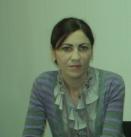
Roza R. Khairova
Author of a number of works on the morphology and word formation of the Ingush language.

Johanna Nichols
Johanna Nichols is a leading Western expert on the Nakh languages, primarily Chechen and Ingush. She has published a fundamental grammar of Ingush, Chechen–English (and English–Chechen) and Ingush–English (and English–Ingush) dictionaries, and a number of other works.
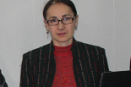
Lilia U. Tarieva
Author of a number of works on the lexicology, morphology and syntax of the Ingush language. She has compiled many dictionaries of Ingush.

Fariza M. Ilieva
Author of a number of works on the morphology and word formation of the Ingush language.
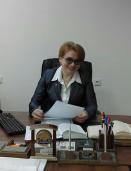
Nina M. Barakhoeva
Author of a number of works on the morphology and word formation of the Ingush language.

Marifa M. Sultygova
Author of a number of works on the lexicology and morphology of the Ingush language and compiler of an Ingush-Russian phrasebook.
Research centres
Ingush Research Institute of Humanities named after Ch. Akhriev
Research on Ingush is being conducted at the Institute. In the Department of the Ingush Language at the Institute, the following works have been prepared: "The Modern Ingush Language. Morphology" (authors: N. M. Barakhoeva, F. M. Ilieva, Z. Kh. Kieva, L. U. Tarieva, R. R. Khairova, M. M. Sultygova); "The Modern Ingush Language. Lexicology and Phraseology" (authors: Z. Kh. Kieva, M. M. Sultygova); "The Modern Ingush Language. Morphemics and Word Formation" (authors: N. M. Barakhoeva, F. M. Ilieva, R. R. Khairova); as well as the "Ingush-Russian Dictionary" (ed. L. U. Tarieva) and the "Ingush-Russian and Russian-Ingush Dictionary of Terms" (ed. N. M. Barakhoeva).

Ingush State University
The Department of Ingush Philology named after F. G. Ozdoeva
The department's team is engaged in training teachers for Ingush-language instruction, developing educational and methodological literature, translation activities (into the Ingush language), popularizing language learning, and studying relevant issues of the Ingush language.

University of California, Berkeley
Johanna Nichols, who studies the Nakh languages, is a faculty member in the Department of Slavic Languages and Literatures at the University of California, Berkeley.

Core references
Grammatical Descriptions
Akhrieva R. I., Ozdoeva F. G., Malsagova L. D., etc. Xanzara ghalghaj mott [Modern Ingush language]. – Grozny, 1972. – 265 p.
Gandaloeva A. Z. Ingushskiy yazyk [The Ingush language]: Uchebnik dlya studentov 1 kursa [A textbook for 1st year students]. – Magas: Serdalo, 2009. – 224 p.
Barakhoeva N. M., Ilieva F. M., Kieva Z. Kh., etc. Sovremennyy ingushskiy yazyk (morfologia) [The modern Ingush language (morphology)]. – Nalchik: Tetragraf, 2012. – 558 p.
Barakhoeva N. M., Ilieva F. M., Khayrova R. R. Sovremennyy ingushskiy yazyk. Morfemika. Slovoobrazovanie. [The modern Ingush language. Morphemics. Word formation]. – Magas: Kep, 2020. – 368 p.
Kieva Z. Kh., Sultygova M. M. Sovremmenyy ingushskiy yazyk. Leksikologiya i frazeologiya [Modern Ingush language. Lexicology and phraseology]. – Magas: Kep, 2017. – 236 p.
Kurkiev A. S. Osnovnye voprosy leksikologii ingushskogo yazyka [Basic questions of lexicology of the Ingush language]. – Grozny, Chechen-Ingush Book Publishing House, 1979. - 254 p.
Malsagov Z. K. Ingushskaya grammatika (so sbornikom ingushskikh slov) [Ingush grammar (with a collection of Ingush words)]. – Vladikavkaz, 1925/ 1963. – 159 p.
Malsagov D. D. Checheno-Ingushskaya dialektologiya I puti razvitiya checheno-ingushskogo literaturnogo (pis’mennogo) yazyka [Chechen-Ingush dialectology and ways of development of the Chechen-Ingush literary (written) language]. – Grozny: Chechinggosizdat, 1941. – 112 p.
Johanna Nichols. Ingush Grammar. University of California Publications in Linguistics 143. Berkeley and Los Angeles: University of California Press, 2012. Pp. xviii + 806.
Dictionaries
Ozdoev I. A. Orfograficheckiy slovar’ ingushskogo yazyka [Orthographic dictionary of the Ingush language]. – Magas: Serdalo, 2003. – 412 p.
Bekova A. I., Dudarov U. B., Ilieva F. M., Malsagova L. D., Tarieva L. U. Ingushsko-russkiy slovar’ [Ingush-Russian Dictionary]. – Nalchik: GP KBR “Respublikanskiy poligrafkombinat im. Revolutsii 1905 g.” [State Enterprise KBR “Republican Polygraph Factory named after the revolutions of 1905”], 2009. –983 p.
Uzhakhov M. G. Ingushsko-russkiy slovar’ [Ingush-Russian Dictionary]. – Vladikavkaz: Ingushskoye izdatelstvo “Serdalo” [Ingush Publishing house “Serdalo”], 1927.
Kartoev M. U. Kratkiy slovar’ ingushskogo obshchestvenno-politicheskoy leksiki [Brief dictionary of the Ingush socio-political vocabulary]. – Nazran, 1995. – 97 p.
Malsagov M. Slovar’ – terminy deloproizvodstva [Dictionary – terms of paperwork]. – Vladikavkaz: Ingushskoe izdatelstvo “Serdalo” [Ingush Publishing House “Serdalo”], 1930.
Malsagov I. Russko-ingushskiy slovar’ [Russian-Ingush Dictionary]. – Vladikavkaz: Ingushskoe izdatelstvo “Serdalo” [Ingush Publishing House “Serdalo”], 1929.
Malsagov M. Ingushsko-russkiy slovar’ [Ingush-Russian Dictionary]. – Vladikavkaz: Ingushskoe izdatelstvo “Serdalo” [Ingush Publishing House “Serdalo”], 1930.
Ozdoev I. A. Russko-ingushskiy slovar’ (Ersiy-g1alg1ay slovar’) [Russian-Ingush Dictionary (Ersiy-g1alg1ay dictionary)] / Ed. by F. G. Ozdoeva, A. S. Kurkieva. – Moscow: Russkiy yazyk [The Russian language], 1980. – 832 p.
Ozdoeva F. G., Malsagova L. D., Dakhkilgov I. A., Tankieva L. H., Chapanov O. V., Patiev S. U. Kratkiy russko-ingushskiy slovar’-spravochnik obshchestvenno-economicheskikh terminov [Brief Russian-Ingush Dictionary-reference book of socio-economic terms]. – Nazran, 1998. – 78 p.
Ozdoeva F. G. Ingushsko-russkiy frazeologicheskiy slovar’ [Ingush-Russian phraseological Dictionary]. – Nalchik: El-Fa, 2003. – 132 p.
Sultygov M. J. Ingushsko-russkiy I russko-ingushskiy slovar’ matematicheskih terminov [Ingush-Russian and Russian-Ingush Dictionary of Mathematical terms]. – Tbilisi: Izdatelstvo “Meridiany” [Publishing house “Meridiani”], 2010. – 252 p.
Tareeva L. U. G1alg1ay-ersiy synonimay doshlorg (Ingushsko-russkiy slovar’ sinonimov) [Г1алг1ай-эрсий синонимай дошлорг (Ingush-Russian Dictionary of synonyms)]. Pt. 1. – Nazran: LLC “Kep”. – 266 p.
Tarieva L. U. Russko-ingushskiy slovar’ antonimov [Russian-Ingush Dictionary of antonyms]. – Nalchik, 2016. – 232 p.
Selected Papers on Grammatical Issues
Arsamakova F. S. Sopostavitelnyy analiz russko-ingushskikh frazeologicheskikh paralleley (na materiale somaticheskikh paralleley [Comparative analysis of Russian-Ingush phraseological parallels (based on somatic phraseological units)] // Voprosy vaynakhskoy morfologii [Questions of Vainakh morphology]. – Grozny, 1983. – p. 81-95.
Arsamakova F. S. Ustoychivye sravneniya s sravnitelnymy soyuzami kak (sanna) v russkom I ingushskom yazykakh [Stable comparisons with comparative conjunctions as (sanna) in the Russian and Ingush languages (based on the material of phraseological equivalents)] // Voprosy otraslevoy leksiki [Questions of industry vocabulary] – Grozny, 1985. – p. 4-17.
Patiev S. U. Strukturno-semanticheskaya kharakteristika ustoychivykh sochetaniy ingushskogo yazyka [Structural and semantic characteristics of stable combinations of the Ingush language]. – Magas, 2007. – 134 p.
Kieva Z. Kh. Lingvisticheskaya terminologiya ingushskogo yazyka [Linguistic terminology of the Ingush language]. – Makhachkala: Alef, 2015. – 310 p.
Sultygova M. M. Sel’skokhozyaystvennaya leksika ingushskogo yazyka [Agricultural vocabulary of the Ingush language]. – Makhachkala, 2016. – 357 p.
Tarieva L. U. Lingvokulturovedcheskie aspekti izuchenia otraslevogo slovarya [Linguistic and cultural aspects of the study of the sectoral dictionary]. – Nalchik, 2009. Izdatelstvo M. I V. Kotlyarovih [Publishing house of M. and V. Kotlyarovs] – 132 p.
Tarieva L. U. Narechie v ingushskom yazyke. Morfologiya [Adverb in the Ingush language. Morphology]. – Lap Lambeert, 2012. Academic Publishing. project ID: #69986
Tarieva L. U. Rechevye componenty paradigm litsa v yazykakh ergativnogo stroya [Speech components of the face paradigm in the languages of the ergative system]. – Magas 2017. LLC “KEP” – 376 p.
Nichols, Johanna. Agreement with overt and null arguments in Ingush. Linguistics 56:4,special issue: Person and gender in discourse: An empirical cross-linguistic perspective, eds. Diana Forker and Geoffrey Haig, 2018? 845-864.
Handel, Zev. 2003. Ingush Inflectional Verb Morphology: A Synchronic Classification and Historical Analysis with Comparison to Chechen. In Holsky, D.A. and Tuite, K. (eds.), Current Trends in Caucasian, East European and Inner Asian Linguistics, 123-176.
Texts
Dakhkilgov I. A. Ingushskie skazaniya, mify, legendy, skazki I poslovitsy [Ingush tales, myths, legends, tales and proverbs]. – Saratov: Children's book, 1998. – 344 p.
Dakhkilgov I. A. Mudrye nastavleniya nashikh predkov. Iz ingushskogo fol’klyera [Wise instructions of our ancestors. From Ingush folklore]. – Nalchik, Izdatelskiy tsentr “El’-Fa” [Publishing Center “Эль-Фа / El-Fa”], 2000.
Dakhkilgov I. A. Antologiya ingushskogo fol’klyera. T. 1. Myfy. Obryadovyy fol’klyer [Anthology of Ingush folklore. Vol. 1. Myths. Ritual folklore] // Sost., perevod I kommentarii I. A. Dakhilgova [Comp., translation and comments by I. A. Dakhkilgov]. – Nalchik, Izdatelskiy tsentr “El’-Fa” [Publishing Center “Эль-Фа / El-Fa”], 2003. – 344 p.
Dakhkilgov I. A. Antologiya ingushskogo fol’klyera. T. 2. Volshebnye skazki [Anthology of Ingush folklore. Vol. 2. Tales] // Sost., perevod I kommentarii L. H. Tankievoy [Comp., translated and commented by L. H. Tankieva]. – Nalchik, Izdatelskiy tsentr “El’-Fa” [Publishing Center “Эль-Фа / El-Fa”], 2003. – 366 p.
Dakhkilgov I. A. Antologiya ingushskogo fol’klyera. T. 3. Skazki o zhivotnykh I sotsialno-bytovye skazki [Anthology of Ingush folklore. Vol. 3. Tales of animals and social and household tales] // Sost., kommentarii I tipologicheskiy analiz B. S. Sadulaeva [Comp., comments and typological analysis by B. S. Sadulaev]. – Nalchik, Izdatelskiy tsentr “El’-Fa” [Publishing Center “Эль-Фа / El-Fa”], 2004. – 363 p.
Dakhkilgov I. A. Antologiya ingushskogo fol’klyera. T. 4. Nartskie skazaniya. Legendi [Anthology of Ingush folklore. Vol. 4. Nartsky stories. Legends] // Sost., perevod, kommentarii I posleslovie I. A. Dakhilgova [Comp., translation, comments and afterword by I. A. Dakhkilgov]. – Nalchik: GP KBR “Respublikanskoy poligrafkombinat im. Revolutsii 1905 g.” [State Enterprise KBR “Republican Polygraph Factory named after the revolution of 1905”], Izdatelskiy tsentr “El’-Fa” [Publishing Center “Эль-Фа / El-Fa”], 2006. – 488 p.
Dakhkilgov I. A. Antologiya ingushskogo fol’klyera. T. 5. Geroiko-epicheskie pesni [Anthology of Ingush folklore. Vol. 5. Heroic and epic songs] // Sost., predislovie I kommentarii M. A. Matieva [Comp., preface and comments by M. A. Matiev]. – Nalchik: GP KBR “Respublikanskoy poligrafkombinat im. Revolutsii 1905 g.” [State Enterprise KBR “Republican Polygraph Factory named after the revolution of 1905”], Izdatelskiy tsentr “El’-Fa” [Publishing Center “Эль-Фа / El-Fa”], 2007 – 440 p.
Dakhkilgov I. A. Antologiya ingushskogo fol’klyera. T. 6. Liricheskie pesni [Anthology of Ingush folklore. Vol. 6. Lyric songs] // Sost., predislovie I kommentarii M. A. Matieva [Comp., preface and comments by M. A. Matiev]. – Nalchik: GP KBR “Respublikanskoy poligrafkombinat im. Revolutsii 1905 g.” [State Enterprise KBR “Republican Polygraph Factory named after the revolution of 1905”], Izdatelskiy tsentr “El’-Fa” [Publishing Center “Эль-Фа / El-Fa”], 2008. – 359 p.
Dakhkilgov I. A. Antologiya ingushskogo fol’klyera. T. 7. Ingushskie predaniya [Anthology of Ingush folklore. Vol. 7. Ingush legends] // Sost., perevod I kommentarii I. A. Dakhilgova [Comp., translation and comments by I. A. Dakhkilgov]. – Nalchik: GP KBR “Respublikanskoy poligrafkombinat im. Revolutsii 1905 g.” [State Enterprise KBR “Republican Polygraph Factory named after the revolution of 1905”], Izdatelskiy tsentr “El’-Fa” [Publishing Center “Эль-Фа / El-Fa”], 2010. – 367 p.
Dakhkilgov I. A. Antologiya ingushskogo fol’klyera. T. 8. Ingushskie predaniya [Anthology of Ingush folklore. Vol. 8. Ingush legends] // Sost., perevod I kommentarii I. A. Dakhilgova [Comp., translation and comments by I. A. Dakhkilgov]. – Nalchik: GP KBR “Respublikanskoy poligrafkombinat im. Revolutsii 1905 g.” [State Enterprise KBR “Republican Polygraph Factory named after the revolution of 1905”], Izdatelskiy tsentr “El’-Fa” [Publishing Center “Эль-Фа / El-Fa”], 2010. – 355 p.
Dakhkilgov I. A. Antologiya ingushskogo fol’klyera. T. 9. Dukhovnaya poesiya [Anthology of Ingush folklore. Vol. 9. Spiritual poetry] // Sost., predislovie I kommentarii M. A. Matieva [Comp., preface and comments by M. A. Matiev]. – Nalchik: LLC “Tetragraf”, 2012. – 239 p.
Dakhkilgov I. A. Antologiya ingushskoho fol’klyera. T. 10. Pritchi, poslivitsy I pogovorki [Anthology of Ingush folklore. Vol. 10. Parables, proverbs and sayings] // Sostavlenie I perevod I. A. Dakhilgova [Compilation and translation by I. A. Dakhkilgov]. – Nalchik: LLC “Tetragraf”, 2012 – 375 p.
Dakhkilgov I. A. Nartskiy epos [Nartsky epos]. – Nalchik: LLC “Tetragraf”, 2012 – 599 p.
Dakhkilgov I. A. G1alg1ay oalamash, duvtsarash, fa'lgash, kitsash / Г1алг1ай оаламаш, дувцараш, фаьлгаш, кицаш. – Saratov, Children's Book. 1998. 344 p.
Malsagov A. O. Skazki I legendy ingushey I chechentsev [Tales and legends of the Ingush and Chechens]. – Moscow: Nauka [Science], 1983. – 384 p.
Malsagov A. U. GIalgIay bagakhbuvtsam / ГIалгIaй багахбувцам. – Magas: Izdatelstvo “Serdalo” [Publishing house “Serdalo”], 2002. – 616 p.
Kodzoev N. D., Matiev M. A. Nartskiy epos ingushey [The Nart Epic of the Ingush]. – Magas, 2017. – 552 p.
Ethnolinguistics and Ethnology
Dzarakhova Z. M-T. Natsionalnoe samosoznanie: etnokulturnye faktory [National identity: ethno-cultural factors]. Nazran, 2007. – 212 p.
Dzarakhova Z. M-T. Traditsionnyy svadebnyy obryad I etiket inguhey [Traditional wedding ceremony and etiquette of the Ingush]. Rostov-on-don. 2010.
Dzarakhova Z. M-T. Vekovye ustoi ingushskoy sem’i [The age-old foundations of the Ingush family]. Rostov-On-Don, 2013.
Agieva L. T. Etnologiya ingushey [Ethnology of the Ingush]. Maykop: Poligraf-Yug [Polygraph-South], 2011. – 552 p.
Resources
Corpora and text collections
The website contains the grammar of Ingush, a collection of texts, audio files, an Ingush phrasebook, and a Swadesh glossary / Dictionary.
Other electronic resources
An online Ingush dictionary that currently contains 13,828 words with translations into Russian.
A glossary/dictionary of the Ingush language containing 1,516 words is presented on the website "IDS – The Intercontinental Dictionary Series."

Bible translations into Ingush are available in both print and electronic form.
As of mid-August 2026, the Ingush Wikipedia contains 2,559 articles in Ingush.
The Ingush Wikipedia was created on April 18, 2018, and is available at https://wikiq.net/ingush-wikipedia
Data for this page kindly provided by
Z. Kh. Kieva (Ingush Research Institute of Humanities named after Ch. E. Akhriev, Magas)
R. R. Khairova (Ingush Research Institute of Humanities named after Ch. E. Akhriev, Magas)
F. M. Kostoeva (Ingush Research Institute of Humanities named after Ch. E. Akhriev, Magas)
Sources:
Field data, personal observations, reports, mass media sites; works on the Ingush language that are specified in the bibliography.
Photos
